
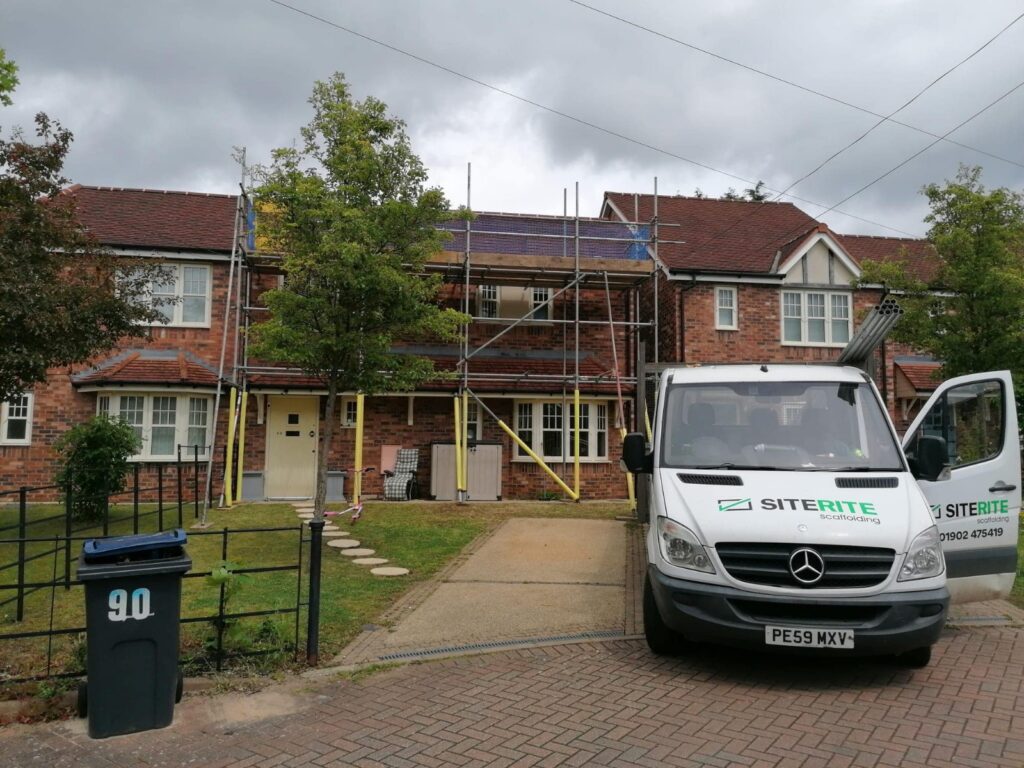
Safety netting with scaffolding is used to provide additional protection during work at height. It can help reduce risks from falling debris, tools or materials while supporting safer working conditions around domestic and commercial projects. It is most commonly used alongside scaffold erection for roofing work, external repairs, refurbishments and projects near public areas.
For homeowners, contractors and site managers, understanding when safety netting may be useful can make project planning clearer and help improve overall safety.
When Safety Netting Is Usually Needed
Safety netting is usually considered when work at height creates a higher risk of falling materials, loose debris or public exposure around the working area.
It is often used on projects involving:
- Roof repairs or roof replacements
- Chimney work
- Solar panel installation
- External decorating or rendering
- Commercial roof works
- Projects close to footpaths, roads or neighbouring properties
- Sites where multiple trades are working at height
Safety netting is not always required on every scaffolding project, but it can be a practical additional measure where protection, containment and safer working conditions are priorities.
What Safety Netting Actually Does
Safety netting is fitted to scaffolding to create a protective barrier around parts of the working area. Its main role is to help contain materials, reduce the chance of debris leaving the scaffold and support wider safety planning.
It should not be seen as a replacement for safe working practices. Instead, it works alongside properly planned scaffold erection, careful site management and appropriate working at height procedures.
The Health and Safety Executive provides guidance on working safely at height, which highlights the importance of planning, supervision and suitable equipment.
Safety Netting Vs Debris Netting
Safety netting and debris netting are sometimes discussed together, but they are not always the same thing.
Safety Netting
Safety netting is generally used to improve protection during work at height, particularly where there is a risk of people, tools or materials falling.
Debris Netting
Debris netting is usually used to help contain dust, small fragments, loose materials and general debris around the scaffold structure.
Combined Protection
On some projects, netting may support both safety and containment aims, depending on the type of work being carried out and how the scaffold is designed.
A professional scaffolding team can advise whether netting is suitable for your project based on the site layout, work type and surrounding risks.
Common Projects Where Netting Is Used
Safety netting can be useful across both domestic and commercial scaffolding projects.
For domestic projects, it may be used when roofers, decorators, solar installers or external trades need safe access around a home. This can be particularly helpful where there are neighbouring gardens, driveways, parked vehicles or public paths nearby.
For commercial projects, safety netting may be used around larger buildings, industrial units, retail premises or occupied sites where additional protection is needed for workers, visitors or the public.
You can learn more about related access solutions through Marsh Scaffold’s domestic scaffolding and commercial scaffolding services.
Why Safety Netting Is Planned With Scaffold Erection
Safety netting works best when it is considered during the scaffold planning stage. This allows the scaffold structure and netting arrangement to be designed together rather than treated as an afterthought.
Planning netting alongside scaffold erection helps ensure:
- The correct areas are protected
- Access remains practical for workers
- The scaffold remains suitable for the project
- Public-facing risks are considered early
- Installation is coordinated efficiently
This is also why safety netting is usually discussed as part of a wider scaffolding solution rather than as a separate standalone service.
When Netting May Not Be Necessary
Not every scaffold requires safety netting. Smaller, lower-risk projects may not need additional netting if the working area is controlled, the site is not public-facing and the type of work does not create significant falling material risks.
However, the decision should be based on the project itself, not guesswork. Factors such as building height, work type, surrounding access, nearby properties and public exposure can all affect whether netting is appropriate.
The Work at Height Regulations 2005 set out legal duties around planning and managing work at height safely.
Common Mistakes To Avoid
One common mistake is assuming that scaffolding alone covers every risk. While correctly erected scaffolding is essential, some projects benefit from extra protection where loose materials, debris or public exposure are involved.
Another mistake is leaving safety planning until late in the project. If netting is needed, it is usually easier and more efficient to plan it before scaffold erection takes place.
It is also important not to use netting as a substitute for good housekeeping. Tools, materials and waste should still be managed carefully throughout the project.
Frequently Asked Questions
What Is Safety Netting Used For?
Safety netting is used with scaffolding to provide additional protection during work at height. It can help contain debris and reduce risks around workers, nearby people and surrounding areas.
Is Netting Needed On Domestic Scaffolding?
It can be useful on domestic scaffolding where roof works, chimney repairs, solar panel installation or external improvements create a risk of falling materials or debris.
Is Safety Netting Only For Large Sites?
No. While it is common on larger commercial projects, safety netting can also support smaller domestic projects where additional protection is appropriate.
Can Netting Be Added After Scaffolding Is Installed?
In some cases, yes, but it is usually better to discuss netting before scaffold erection so the full access and safety setup can be planned properly.
Does Marsh Scaffold Provide Safety Netting?
Yes. Marsh Scaffold can provide safety netting as a supporting service alongside scaffold erection where it is suitable for the project.
Planning Safer Scaffolding For Your Project
Safety netting is a useful additional measure when a project involves working at height, falling material risks or public-facing areas. It is not needed on every scaffold, but when used correctly, it can help create a safer and more controlled working environment.
Marsh Scaffold provides professional scaffold erection with safety netting available where appropriate. To discuss the safest access solution for your project, contact the team through our safety netting service page or request advice online.